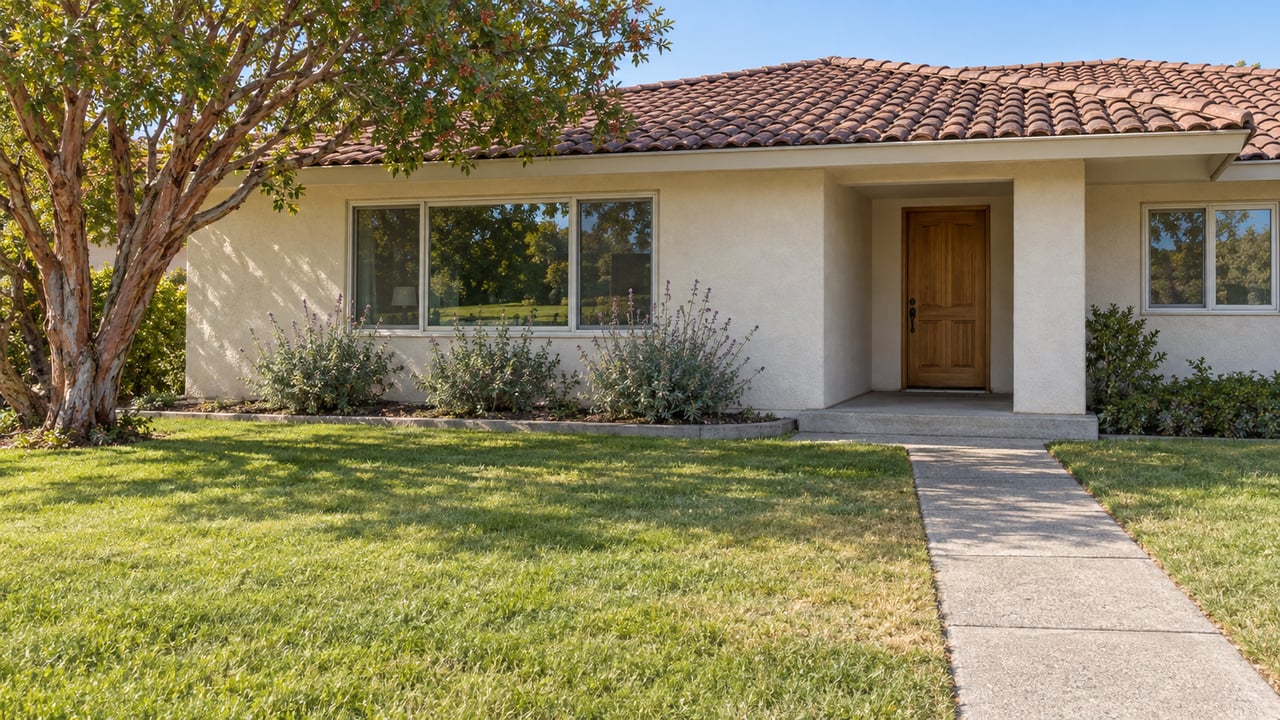
Why Del Cerro Never Had a Maintenance Assessment District, and What the Proposed One Would Change
October 15, 2026
October 15, 2026
Pull a recent property tax bill for a Del Cerro house and one for a Tierrasanta house and you'll see a line on the Tierrasanta bill that the Del Cerro bill doesn't have. Tierrasanta homeowners pay into a Maintenance Assessment District, or MAD. Del Cerro homeowners don't. That gap is the subject of an organized neighborhood effort to close it. A draft proposal sets the new charge at $243 a year for a detached single-family home, and starting in the district's second fiscal year, the maximum allowed charge would move up or down with the San Diego Consumer Price Index.
For anyone comparing Del Cerro to newer neighborhoods nearby, the missing line item makes ownership look a little cheaper. Whether it stays missing depends on a petition and a property-owner ballot that haven't finished yet.
San Diego didn't always make new neighborhoods pay for their own extra upkeep. Times of San Diego reported in April 2026 that the communities that came after the Navajo-area neighborhoods of Grantville, Allied Gardens, Del Cerro and San Carlos were required to form a MAD as a condition of being built. Tierrasanta, Rancho Bernardo and Rancho Peñasquitos are examples. The same article notes that the city puts only a minimal amount toward maintaining city property in residential neighborhoods, which covers parks and medians.
So Del Cerro's medians and landscaped areas run on that baseline. When neighbors want more, they've had to raise the money themselves. Princess Del Cerro Park on Wenrich Drive shows how that works. Tree roots lifted the sidewalk beside the playground, so the city scheduled a repair and planned to pour plain cement over the whole area. That would have covered the commemorative bricks that paid for the playground upgrade about 25 years ago. Instead, the city gave Friends of Del Cerro the chance to raise money to replace the brick section, and the group is now selling new bricks at $250 and $150 apiece.
A MAD would replace that model, where improvements get funded one brick at a time, with a fixed charge on every parcel's tax bill.
The proposal is called Enhance Del Cerro. The figures below come from a preliminary engineer's report prepared by EFS Engineering in January 2024, which was written to support the petition stage:
Friends of Del Cerro's project page adds signage on Del Cerro Boulevard, College Avenue and Navajo Road, flagpole concepts on Del Cerro Boulevard and College Avenue, and an entrance feature on College Avenue. These are ideas from the advocacy group. They aren't line items in the engineer's report.
The $243 figure comes from a draft, and the report itself says a final engineer's report will be prepared once the petition succeeds. The number could change before anyone votes on it.
Del Cerro's proposed rate is higher than the rates in the city's FY 2027 reports for established districts, which were published in May 2026. FY 2027 runs from July 1, 2026 through June 30, 2027.
| District | Rate per equivalent benefit unit | Source window |
|---|---|---|
| Del Cerro, proposed | $243.00 | January 2024 draft |
| Scripps-Miramar Ranch | $235.26 | FY 2027 |
| Tierrasanta | $103.18, with a maximum authorized rate of $107.17 | FY 2027 |
The Tierrasanta FY 2027 report spreads its roughly $996,079 budget across 6,720 parcels and about 9,654 benefit units. Del Cerro's draft would raise about three-quarters of that total from roughly 3,063 benefit units. A smaller base sharing a similar-sized budget pushes the per-unit rate up. As proposed, the neighborhood that never had a district would pay more than twice what Tierrasanta pays per unit.
These are per-unit rates, so a specific parcel's charge depends on its land use and its zone. The Scripps-Miramar Ranch district, for example, has several assessment zones.
Both the existing districts and the Del Cerro draft adjust their caps up or down with the San Diego Consumer Price Index. Tierrasanta's maximum went up by a 3.86% cost-indexing factor heading into FY 2027. The Del Cerro draft uses the same kind of index and doesn't set a fixed percentage cap.
City of San Diego guidance says forming a new MAD usually takes one to two years. The sequence works like this:
Two details here matter for anyone buying or selling in the boundary area. First, the vote counts ballots cast, not all parcels, and it's weighted by assessment. A detached house's ballot carries more weight than a condo unit's, and parcels that don't return a ballot don't count either way. Second, the notice and ballot are mailed to the people who own the property at that moment. If you close during a ballot window, the previous owner may be the one who receives it. And if you bought in spring or summer, the first bill showing a new assessment could arrive that December, depending on when enrollment happens.
As of the latest public reporting, in April 2026, organizers were still collecting signatures. We couldn't find a scheduled ballot, a hearing date, or a final engineer's report in the city materials available today. The Enhance Del Cerro website still links the January 2024 draft. A Del Cerro MAD isn't approved, and it isn't scheduled for a vote.
Both sides of the debate appear in the 2025 Navajo Community Planning Group minutes, from the meeting where Friends of Del Cerro presented the idea. The group, formed in 2015, said its goal was general beautification along well-traveled roads. It also said that if the district passed, the first money could be available in about two years. Concerns from the meeting are recorded too:
The minutes also mention that La Jolla was in a dispute with the city over its own MAD.
How would condos and apartments be charged? Under the draft, a condo unit is assessed $194.40 and an apartment unit $145.80, compared with $243 for a detached single-family home.
Is every address with a Del Cerro feel inside the boundary? The draft boundary runs roughly from Navajo Road to Interstate 8 and east to Park Ridge Drive and Chaparral Canyon. Properties near the edges need a parcel-level check against the final map.
Does a MAD replace what the city already does? The Times of San Diego coverage describes the city's current residential maintenance spending as minimal. A MAD pays for enhanced work on top of that baseline.
This is general information about how a proposed assessment works. It isn't legal, tax or financial advice, so confirm how any assessment would affect your own property with the right professional.
If a Del Cerro home is on your list, or you're getting ready to sell one, the status of this petition belongs in your carrying-cost math and your closing timeline. Megan Saputo can help you factor it in alongside price, condition and timing. Let's Connect.
Stay up to date on the latest real estate trends.
Experience personalized representation, creative strategies, and dedicated support from consultation through closing day. Partner with Megan Saputo for honest advice, expert negotiation, and a client-first approach to every transaction.