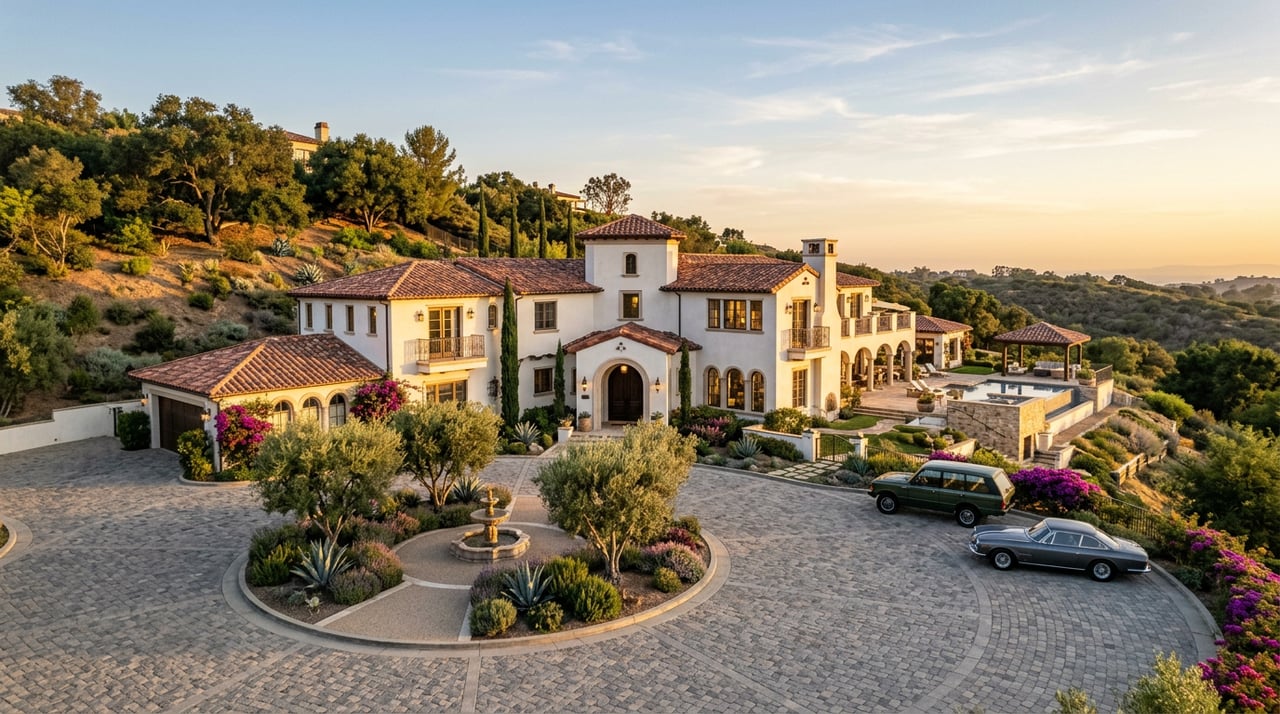
The Median Price in Rancho San Diego Is Hiding Three Different Markets
September 24, 2026
September 24, 2026
A buyer pulls up two listings under the same neighborhood name. One is a condo near the Rancho San Diego Towne Center asking under $400,000. The other is a custom hillside build on a half-acre lot asking well north of $900,000. Same zip code area. Same school districts. Same freeway exit. The two homes have almost nothing else in common, and neither one tells you what "Rancho San Diego" actually costs.
That gap is not a glitch in the data. It is the data telling you something true: Rancho San Diego is not one housing market wearing one price tag. It is three markets stacked under a single name, and the median price you see quoted online depends entirely on which one the source happened to sample that month.
Here is what the numbers actually say, and when they said it.
Homes.com's trailing twelve-month figure, last updated in February 2026, put the median sale price in Rancho San Diego at $944,950, with an average sale price of $917,153. Homes here were moving fast by national standards, closing in about 23 days on average against a national average closer to 53 to 54 days.
Movoto's June 2026 snapshot told a very different story. The median list price that month was $467,000, or $384 per square foot. That is roughly half the Homes.com sold-price median, taken just a few months apart.
Redfin's numbers, drawn from a monthly snapshot covering July 2025 sales, showed the median sale price at $954,000, described as up 60.2 percent year over year. In the same breath, days on market for that period rose to 44, up from 29 the year before. Only 21 homes sold that month, compared with 12 the year before.
Read that again. Prices supposedly up 60 percent, but homes taking longer to sell, not less. That is not what a genuinely hot market looks like. It is what a thin market looks like when a handful of expensive, unusual homes happen to close in the same 30-day window. Twenty-one sales is a small enough sample that two or three seven-figure hillside estates closing in the same month can swing the median hard in one direction while the pace of everyday transactions barely moves. The percentage is real math. It is just not telling you what most buyers assume it's telling them.
None of these sources is wrong. They are measuring different slices of the same name at different moments, and none of them tell you which slice you're looking at.
Rancho San Diego started as a master-planned subdivision effort beginning in the 1970s, and it grew into a census-designated place of just under 22,000 residents by the 2020 census. What it never became is architecturally uniform. Walk the area and you'll find three distinct product types, each with its own price logic.
| Sub-market | Where you'll see it | What's actually for sale |
|---|---|---|
| Original flatland tracts | Streets off Jamacha Road near the Towne Center | Single-story three and four bedroom homes from the 1970s and 80s, many with no HOA at all |
| HOA condo and townhome communities | Complexes like Villa MonteVina and Avocado Village | One and two bedroom units with pools, gyms, and monthly dues built into the real cost |
| Hillside custom estates | The Cottonwood neighborhood, Explorer Ridge Estates, gated pockets like Fuerte Knolls | Larger custom builds on half-acre-plus lots, some dating to 2004 or newer, priced well above the neighborhood median |
A condo at Villa MonteVina comes with a pool, a gym, a sauna, and tennis access baked into the HOA dues. That's a real monthly cost that doesn't show up in the sale price at all, and it changes what "affordable" actually means once you run the full monthly number. A ranch home built in 1974 on a flat, usable acre near the Towne Center carries none of that overhead but also none of the amenities. A custom hilltop build in Explorer Ridge Estates, where only one other home has changed hands there in the past year, is playing in an entirely different price tier and moves at its own pace regardless of what the rest of the neighborhood is doing.
When a single median gets calculated across all three, it describes none of them accurately. That's the mechanism behind the wild swings between Movoto's list-price figure and the sold-price medians from Homes.com and Redfin. They aren't disagreeing about the market. They're sampling different rooms in the same house.
If you're comparing Rancho San Diego to somewhere like La Mesa or San Carlos using a single median price, you're comparing an average of three markets to a more uniform one. The honest comparison isn't neighborhood to neighborhood. It's sub-market to sub-market: flats to flats, condo to condo, hillside estate to hillside estate.
Before you get attached to a number you saw online, ask which slice it came from. A listing agent or your own agent can tell you in minutes whether a given address sits in an HOA complex, an original tract, or one of the custom hillside pockets, and that answer matters more than the headline median ever will.
There's a second detail that catches buyers off guard here, and it has nothing to do with price. Rancho San Diego carries an El Cajon mailing address, but it is not inside the city of El Cajon. It's unincorporated San Diego County territory, one of dozens of unincorporated communities in the East County region alongside places like Spring Valley and Jamul.
That distinction is mostly invisible until you want to add an ADU, pull a remodel permit, or ask about a zoning variance. In that moment, you're dealing with San Diego County's planning process, not the City of El Cajon's, and the rules, timelines, and fee schedules aren't the same. Anyone shopping here with renovation plans, and given how many of these homes date to the 1970s and 80s, that's a lot of buyers, should confirm jurisdiction on the specific parcel before assuming their contractor's El Cajon experience transfers directly.
Is Rancho San Diego part of the city of El Cajon? No. It's an unincorporated census-designated place in San Diego County that happens to share an El Cajon mailing address. Permit and zoning authority runs through the County.
Does every home here have an HOA or a special assessment? No, and that's part of what makes the pricing so uneven. Original tract homes near Jamacha Road often carry no HOA at all, while condo and townhome communities like Villa MonteVina and Avocado Village build pool, gym, and grounds costs into monthly dues. Always ask for the specific parcel's tax bill and, where applicable, the HOA's current budget before assuming a price you see online reflects your full monthly cost.
Why do online estimates disagree so much for this neighborhood? Because they're measuring different sub-markets in different months. A listing-price median pulled in a slow month for hillside estates will look nothing like a sold-price median from a month when a couple of those estates happened to close. The neighborhood name is one label covering three genuinely different products.
If you're weighing Rancho San Diego against another East County community, or trying to figure out which of its three sub-markets actually fits your budget and your renovation plans, that's exactly the kind of groundwork worth doing before you write an offer. Megan Saputo has spent nearly two decades working San Diego County transactions, from HOA-governed condos to custom hillside builds to properties that need real contractor coordination before or after closing. Let's Connect and figure out which market inside Rancho San Diego actually matches what you're trying to do.
Stay up to date on the latest real estate trends.
Experience personalized representation, creative strategies, and dedicated support from consultation through closing day. Partner with Megan Saputo for honest advice, expert negotiation, and a client-first approach to every transaction.